
Myopia, commonly known as nearsightedness, is a refractive error that makes distant objects appear blurry while close objects remain clear. It occurs when the eye grows too long or the cornea is too steeply curved, causing light to focus in front of the retina instead of directly on it.
At Stewart Eye, we provide personalized pediatric eye care to diagnose, monitor, and manage myopia, helping children maintain clear vision and healthy eye development. Care is led by Dr. Sara Stewart, with a thoughtful and child-centered approach.
Children with one or both nearsighted parents are more likely to develop myopia.
Excessive elongation of the eyeball during childhood can lead to nearsightedness.
Prolonged near work such as reading, screen use, and limited breaks may contribute to myopia progression.
Studies suggest that increased outdoor activity during childhood may help reduce the risk of myopia development and progression.
Understanding these factors helps guide prevention and management strategies.
Early detection allows for better vision correction and management.
Myopia is commonly managed with corrective lenses and regular monitoring. Ongoing eye exams help track changes in vision and ensure prescriptions remain accurate.
Regular eye care plays an important role in maintaining visual comfort and preventing unnecessary progression.
Routine eye exams are essential for children with myopia. Monitoring vision changes allows for timely adjustments in treatment and supports long-term eye health.
With proper care, children with myopia can achieve clear, comfortable vision and continue to thrive at school and in daily life.
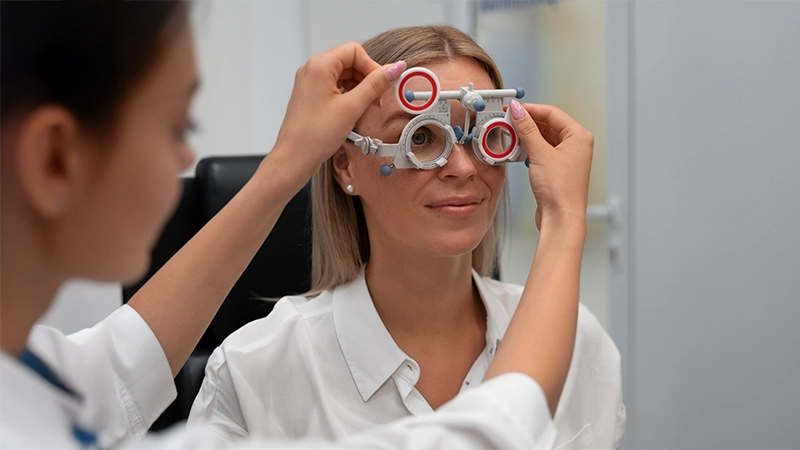
We evaluate distance and near vision to identify myopia.
Dr. Stewart assesses eye growth patterns and changes in vision.
A customized plan is created to correct vision and support healthy eye development.
If your child is having trouble seeing far away or has been diagnosed with nearsightedness, early evaluation can help protect their vision. Use the form below to request an appointment, and our team will contact you to confirm availability.
Most vision or medical insurance plans cover eye exams and myopia management.