
Flashes and floaters are common visual disturbances that may appear as spots, lines, or flashes of light in your vision. While often harmless, they can sometimes indicate serious underlying eye conditions that require prompt evaluation.
At Stewart Eye, we provide comprehensive evaluation and personalized care to identify the cause of flashes and floaters and protect your vision. Care is led by Dr. Sara Stewart, using advanced diagnostic imaging and clinical expertise.
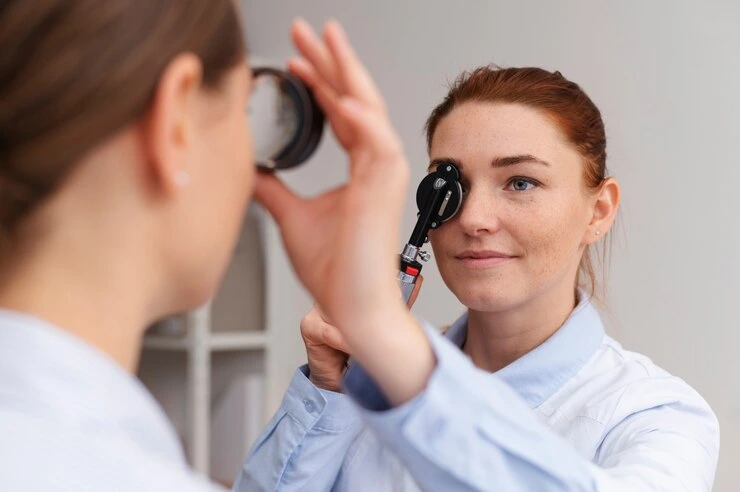
Allows close examination of the retina and vitreous for tears, detachment, or abnormalities.
Assesses peripheral vision and detects areas of visual field loss.
Captures detailed images of the retina and vitreous to evaluate structural changes.
Provides additional evaluation when the retina cannot be clearly visualized.

Treatment for flashes and floaters depends on the underlying cause. Many cases require monitoring, while others may need urgent referral or intervention.
Our priority is early detection and appropriate care to prevent vision-threatening complications.
Our dry eye care process is designed to identify causes and provide effective relief.
We evaluate the retina and vitreous using advanced imaging and diagnostic testing.
Dr. Stewart determines whether symptoms are age-related or related to retinal conditions.
A customized treatment or monitoring plan is recommended based on your diagnosis.
If you are experiencing flashes, floaters, or sudden vision changes, timely evaluation is critical. Use the form below to request an appointment, and our team will contact you to confirm availability.
Floaters are common with aging, but sudden flashes or an increase in floaters should be evaluated immediately.
Most medical insurance plans cover evaluation for flashes and floaters.